
The high-stakes world of the National Rugby League is defined by its brutal unpredictability, where the trajectory of an entire season can alter in a single, agonizing moment. For the Melbourne Storm, a club long revered as the gold standard of consistency, resilience, and clinical execution, the latest developments from the medical room have sent a shiver through the purple army. In a sport where the margin between triumph and heartbreak is razor-thin, the news emerging from AAMI Park has cast a significant shadow over their immediate future.
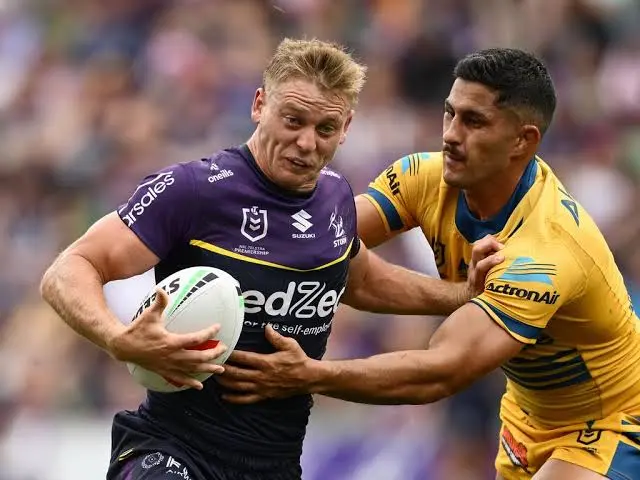
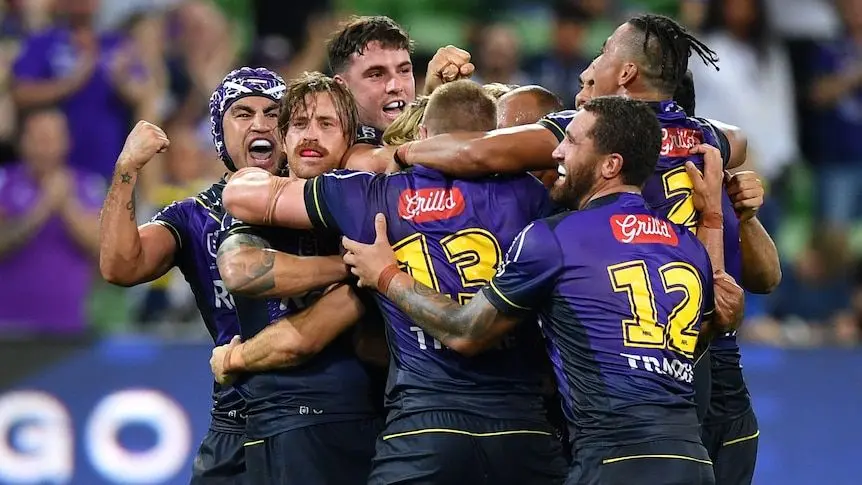
The club’s aspirations of securing a comfortable position within the top eight and making a deep run into the finals have taken a substantial hit with the confirmation that their talismanic five-eighth, Cameron Munster, has suffered a severe injury.


The initial prognosis alone was enough to cause widespread concern across the rugby league community, with medical staff ruling Munster out for an estimated four to six weeks. However, the anxiety gripping the club and its supporters deepened dramatically with the revelation that the situation is far more intricate than a standard rehabilitation period. Munster is scheduled to undergo immediate surgery, a development that inherently introduces variables regarding recovery timelines, post-operative healing, and the grueling process of regaining match fitness.
For a player whose game relies so heavily on explosive agility, instinctive spatial awareness, and deceptive structural running, an operation of this nature presents a formidable hurdle at a critical juncture of the premiership cycle.
Losing a player of Munster’s caliber is not merely a tactical challenge; it is a profound psychological test for the entire organization. Munster is the emotional heartbeat of the Melbourne Storm, a big-game specialist who thrives when the pressure is at its most suffocating. His unique ability to create something out of nothing, to break open defensive lines with an ad-lib piece of brilliance, is virtually impossible to replicate.
As the Storm navigate a highly competitive ladder where multiple teams are breathing down their necks for a coveted finals berth, playing at least a month and a half without their primary playmaker threatens to derail their campaign entirely. The door to the top eight, which previously looked wide open, now feels like it is slowly swinging shut, forcing the club to confront a genuine existential crisis on the field.
In the immediate aftermath of this devastating blow, all eyes turned to master coach Craig Bellamy. Throughout his illustrious career, Bellamy has earned a reputation for being the ultimate strategist, a mentor capable of extracting elite performances from unheralded players and orchestrating victories against seemingly insurmountable odds. The rugby league public waited with bated breath to see how the veteran mentor would reshape his spine to account for Munster’s absence. When Bellamy finally broke his silence to announce the tactical pivot, his decision caught fans and pundits completely off guard, sparking intense debate across the sporting landscape.
Instead of opting for a traditional playmaker or seeking an external, short-term signing to steady the ship, Bellamy announced that the responsibility of filling Munster’s monumental shoes would fall squarely on the shoulders of Tyran Wishart. The decision to elevate Wishart to the crucial five-eighth role sent shockwaves through the fan base, not because of a lack of faith in the young player’s ability, but due to the sheer boldness of the tactical shift.
Wishart, widely respected for his versatility, has predominantly carved out a role as the ultimate utility player—a robust, energetic figure accustomed to injecting spark from the bench, filling in at hooker, or providing coverage in the outside backs. Thrusting a utility specialist into the primary creative driver’s seat during a season-defining crisis is a gamble of historic proportions.
Yet, upon closer logical examination, Bellamy’s decision reveals the underlying genius that has kept the Melbourne Storm at the apex of the NRL for decades. Bellamy does not make decisions based on emotion or public perception; his strategies are rooted in rigorous sports science, training-ground data, and a deep understanding of player psychology. By selecting Wishart, Bellamy is prioritizing structural stability, defensive grit, and high-work-rate reliability over an attempt to replicate Munster’s inimitable flair. The coach understands that trying to find another Cameron Munster is a fool’s errand.
Instead, the Storm will adapt their game plan to suit Wishart’s specific strengths—his exceptional dummy-half service, his low-center-of-gravity running game, and his relentless defensive sturdiness.
This tactical pivot suggests that the Melbourne Storm will likely transition into a more conservative, field-position-oriented style of football in the coming weeks. With Jahrome Hughes expected to shoulder the lion’s share of the kicking and organizational duties, Wishart’s role will be to provide a reliable link between the forwards and the edges, reducing unforced errors and ensuring that the Storm win the battle of attrition through the middle of the park. It is a pragmatist’s approach to an emergency scenario.
While it may not possess the spectacular aesthetic appeal that Munster routinely provides, it is a formula designed to keep the Storm competitive, grind out narrow victories, and stop the premium ladder positions from slipping away entirely.
For Tyran Wishart, this sudden elevation represents the ultimate defining moment of his professional career. Emerging from the shadow of being a reliable utility to becoming the focal point of a championship-caliber team’s spine is a monumental leap. The pressure will be immense, as opposition defensive coaches will undoubtedly target him, testing his decision-making under fatigue and challenging his kicking game. However, history has shown that the Melbourne Storm system is uniquely designed to nurture talent in these exact scenarios. Countless players have entered the Storm system as unheralded prospects only to emerge as representative superstars under Bellamy’s tutelage.
Wishart possesses the pedigree, the work ethic, and the internal club respect to rise to this occasion, and this trial by fire could very well accelerate his evolution into an elite NRL permanent starter.
The next month will determine the ultimate fate of the Melbourne Storm’s season. The challenge is undeniable, and the margin for error has effectively evaporated. If the forward pack can lay a dominant platform and Wishart can successfully execute a disciplined, composed game plan, the Storm may just weather this ferocious storm and maintain their top-eight status until Munster can make his dramatic post-surgery return. It is a narrative of adversity that the club has conquered before, but one that will require every ounce of their legendary culture to overcome once again.
Given the massive structural shift from Cameron Munster’s unpredictable brilliance to Tyran Wishart’s structured, industrious style of play, do you believe Craig Bellamy’s pragmatic gamble will be enough to keep the Melbourne Storm anchored in the top eight, or will opposition teams successfully exploit Wishart’s lack of specialist five-eighth experience to dismantle the Storm’s finals aspirations?