
The world of international football often finds itself at a crossroads where the immediate demands of club competition intersect with the long-term aspirations of national pride, and few stories have captured the collective imagination of the sporting public quite like the meteoric rise and subsequent physical management of Lamine Yamal.
At the heart of the latest discussions surrounding the young phenom is a sense of cautious optimism, underscored by recent comments from his club manager, Hansi Flick, who has sought to provide clarity and reassurance regarding the player’s fitness ahead of the grandest stage of them all: the 2026 World Cup. The narrative surrounding Yamal has shifted from one of pure wonder at his technical ability to a more nuanced conversation about longevity, recovery, and the scientific approach to player welfare in the modern era.
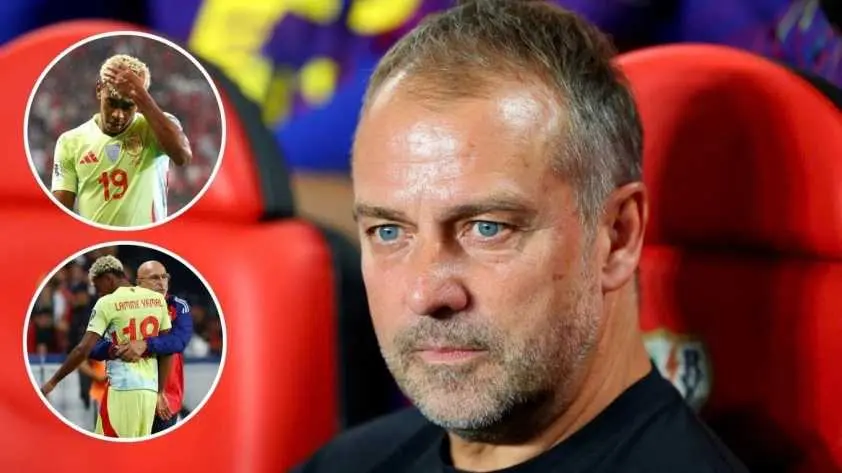
Hansi Flick, a coach known for his meticulous attention to detail and his preference for high-intensity, physically demanding systems, has recently addressed the concerns regarding Yamal’s recent injury setbacks with a characteristic blend of German pragmatism and unwavering support. In a statement that has resonated across the footballing landscape, Flick declared that Lamine Yamal will certainly recover in time to lead his nation at the 2026 World Cup.
This pronouncement was not merely a gesture of goodwill but was grounded in the medical assessments conducted by the club’s staff, who have categorized the player’s current physical issues as minor and manageable. The German tactician’s confidence serves as a stabilizing force for a fan base that often reacts with anxiety whenever their brightest star shows signs of physical vulnerability.
Flick’s perspective is shaped by his experience at the highest levels of the game, including his successful tenure with Bayern Munich and the German national team, where he witnessed firsthand the importance of periodization and the psychological impact of a coach’s public stance on a player’s recovery. By de-escalating the severity of the injury, Flick is not only protecting the player from unnecessary pressure but is also setting a roadmap for a gradual and sustainable return to peak form.
The 2024 Golden Boy winner, a title that solidified his status as the premier young talent in world football, carries a weight of expectation that few his age have ever had to shoulder. Yet, according to Flick, the road to 2026 is wide open, and the current hurdles are merely brief pauses in what promises to be a legendary career.
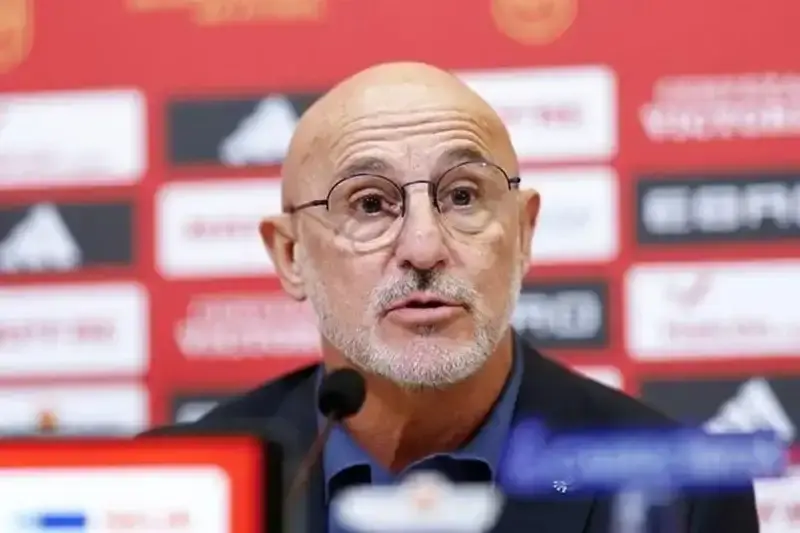
The ripples of Flick’s confidence were felt almost immediately in the Spanish camp, where Luis de la Fuente, the architect of Spain’s recent tactical evolution, added his own layer of insight into the future of his most prized asset. De la Fuente has always maintained a paternal yet professional relationship with Yamal, recognizing that while the player possesses the maturity of a veteran on the pitch, his body is still that of a developing young man.
The Spanish coach’s comments regarding Yamal’s future were not focused on the immediate fear of absence but rather on the strategic integration of the player into the national team’s long-term philosophy. He expressed a profound sense of excitement about what lies ahead, suggesting that the upcoming World Cup will be the stage where Yamal truly transitions from a brilliant prospect into a global icon of the game. This synchronicity between the club manager and the national team coach is a rare and vital component of a player’s success. Too often, the “club vs.
country” debate results in a tug-of-war that leaves the athlete depleted, but in the case of Lamine Yamal, there appears to be a harmonious understanding that his health is the ultimate priority for all parties involved. De la Fuente’s remarks have fueled a sense of anticipation among the Spanish supporters, who see the 2026 World Cup as an opportunity to reclaim their position at the summit of international football, with Yamal serving as the creative heartbeat of the squad.
The discourse is no longer about whether he will be there, but rather how his presence will redefine the ceiling of what this Spanish team can achieve.
To understand the significance of these reassurances, one must look at the broader context of sports science in the 21st century. The modern game is faster, more physical, and more grueling than ever before, with calendars packed with domestic leagues, continental cups, and international windows. For a player like Yamal, who relies on explosive pace, intricate dribbling, and sudden changes of direction, the strain on the musculoskeletal system is immense. Hansi Flick’s assertion that the injury is “minor” suggests a sophisticated monitoring system at play, one that identifies fatigue and micro-trauma before they escalate into career-altering ruptures.
This proactive approach to injury management is what allows coaches like Flick and De la Fuente to remain so optimistic. They are not merely wishing for a recovery; they are overseeing a data-driven process designed to ensure that Yamal reaches 2026 not just fit, but in the best physical condition of his life. The excitement expressed by fans is therefore justified, as it is backed by the expertise of some of the best medical and technical minds in the sport.
The narrative of the “Golden Boy” is evolving into a narrative of the “Resilient Athlete,” a transition that is necessary for any player who intends to stay at the top of the game for the next decade or more.
Furthermore, the psychological dimension of this situation cannot be overlooked. For a young player, hearing your manager speak with such certainty about your future on the world stage provides an invaluable boost to morale. It removes the “what ifs” that can often plague an injured athlete’s mind and replaces them with a clear objective. When Flick speaks of the 2026 World Cup, he is giving Yamal a horizon to look toward, ensuring that the daily grind of rehabilitation is seen as a meaningful step toward a glorious goal.
Similarly, De la Fuente’s enthusiasm serves to remind the player of his central role in the national identity of Spanish football. This collective support system acts as a shield against the intense scrutiny of the media and the weight of public expectation. The 2026 World Cup, hosted across North America, is set to be a landmark event in the history of the sport, and the prospect of a fully fit and flourishing Lamine Yamal participating in it is a boost for the tournament’s global appeal.
FIFA and organizers understand that the presence of generational talents is what drives viewership and inspires the next generation of players, and Yamal is undoubtedly the face of that new wave.
As the months progress toward the tournament, the focus will inevitably remain on Yamal’s every move, every match, and every training session. However, the current consensus between Flick and De la Fuente provides a much-needed period of calm. It suggests that the lessons of the past—where young talents were often overworked to the point of burnout—have been learned. The management of Yamal is being handled with a level of delicacy and strategic patience that reflects a new era of footballing intelligence. The fans’ excitement, while high, is now tempered with the knowledge that there is a plan in place.
This is not a story of a desperate race against time, but rather a disciplined march toward a predetermined destination. The 2026 World Cup will arrive, and if the words of Hansi Flick and Luis de la Fuente are anything to go by, Lamine Yamal will be there, ready to meet his destiny. The beauty of football lies in these stories of preparation and promise, where the technical brilliance of a player is matched by the wisdom of those who guide him.
In the end, the journey of Lamine Yamal toward the 2026 World Cup is a testament to the collaborative spirit of the modern game, where the health of the individual is recognized as the foundation of the success of the collective. The world waits with bated breath, not out of fear of what might be lost, but in joyful anticipation of what is certain to be gained when the 2024 Golden Boy finally takes his place on the world’s greatest stage.
This sense of certainty is the ultimate gift that Flick and De la Fuente have given to the supporters, ensuring that the conversation remains focused on the magic of the game rather than the misfortune of injury. It is a rare moment of clarity in the often-turbulent world of professional sports, a moment that reinforces why we watch, why we hope, and why we celebrate the stars who illuminate the pitch.
The path is set, the recovery is underway, and the future of Lamine Yamal looks brighter than ever as he prepares to write the next great chapter of his career in 2026.