
The State of Origin arena is widely regarded as the absolute pinnacle of rugby league, a gladiatorial theater where the physical demands of the sport intersect with an almost suffocating psychological pressure. It is a domain where domestic club form is frequently rendered irrelevant, and players are judged solely on their capacity to endure, adapt, and execute under the most intense scrutiny imaginable. For decades, the fierce rivalry between the Queensland Maroons and the New South Wales Blues has captivated the sporting public, producing moments of transcendent brilliance and heartbreaking despair.
As the current series hurtles toward its climax, the narrative has been meticulously set: a fiercely contested battle that currently stands at a 1-1 deadlock, setting the stage for a monumental Game 3 decider. In this high-stakes environment, every tactical adjustment, every team selection, and every public endorsement is analyzed with forensic precision by media and fans alike.
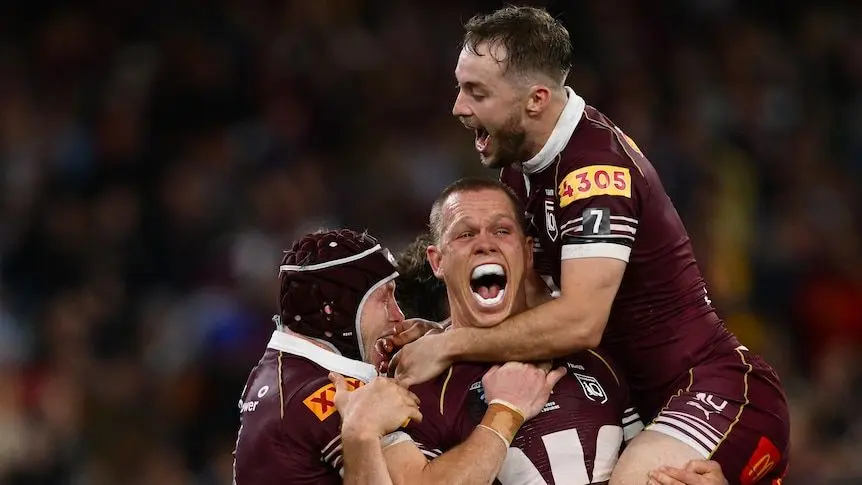
In the modern era of sports broadcasting, it is customary for former legends of the game to offer their insights, often leaning on nostalgia or tribal loyalty to fuel the pre-match theater. However, few voices command the universal respect and intellectual authority of Cooper Cronk. Throughout his illustrious playing career, Cronk was the undisputed architect of the Melbourne Storm, the Sydney Roosters, the Queensland Maroons, and the Australian national team.
He was not a player who relied on sheer physical dominance or ad-lib brilliance; rather, he was a surgical tactician, a halfback whose supreme football intelligence allowed him to dissect defensive lines with the precision of a grandmaster playing chess. Since transitioning into the commentary box, Cronk has maintained this analytical rigor. He is notoriously measured in his praise, refusing to engage in the sensationalist hyperbole that often characterizes sports media. When Cronk speaks, the rugby league world listens, knowing his observations are rooted in a profound understanding of the game’s intricate mechanics.
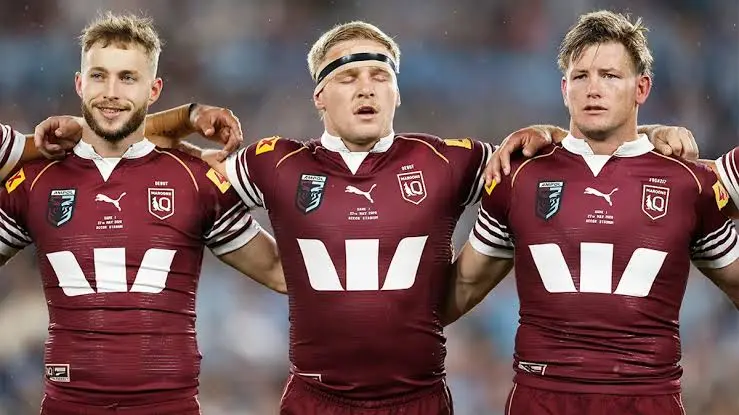
Therefore, it sent a palpable ripple through the sporting community when Cronk recently broke from his typically reserved demeanor to make a definitive, unequivocal declaration regarding the upcoming Game 3.
Speaking with a quiet but absolute certainty, the Maroons legend publicly endorsed a young playmaker, stating without hesitation that this individual is not just a promising talent, but the undeniable “future of Queensland.” Cronk asserted that in the unforgiving crucible of the upcoming decider, this specific player possesses the exact physiological tools and mental fortitude required to dismantle the New South Wales Blues and secure the series victory for the Maroons.
For a man who wore the prestigious Queensland number seven jersey during an era of unprecedented dominance, passing the torch in such a public and definitive manner is a gesture of immense significance.
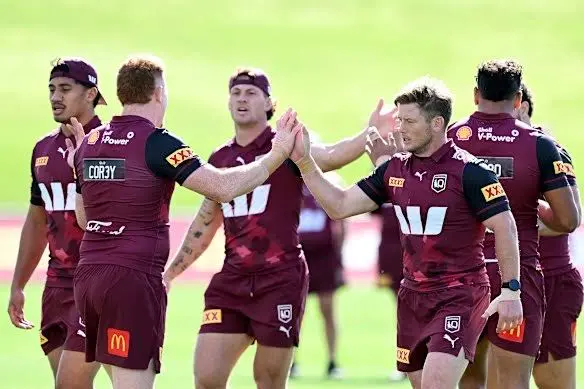
The player upon whom Cronk has bestowed this monumental endorsement is none other than Sam Walker. To those who have closely monitored Walker’s trajectory, this coronation, while sudden in its public magnitude, feels like the logical culmination of years of meticulous development. Hailing from a family with deep, interwoven roots in the sport of rugby league, Walker was practically born with a football in his hands. Yet, pedigree alone does not guarantee survival in the State of Origin cauldron.
What has elevated Walker from a talented prospect to the focal point of Queensland’s immediate and long-term ambitions is his extraordinary performance trajectory, most notably his masterclass in the recent Game 2 clash that single-handedly rescued the series for the Maroons.

Entering Game 2, the Queensland Maroons were a team burdened by the heavy weight of expectation and the sting of a comprehensive defeat in the series opener. The New South Wales Blues had dominated the physical exchanges and dictated the tempo, leaving the Maroons desperately searching for an offensive spark. It was in this atmosphere of impending crisis that Sam Walker stepped into the void, assuming a level of responsibility that belied his chronological age. What transpired was a revelation. Walker did not merely participate in the game; he orchestrated it.
His performance was a compelling blend of youthful audacity and veteran composure, a performance that ultimately dragged his team to a crucial victory, leveling the series at 1-1 and shifting the psychological momentum back across the border.
A tactical analysis of Walker’s influence in Game 2 reveals exactly why a purist like Cooper Cronk is so deeply enamored with his game. Unlike the traditional, heavily structured playmakers who prefer to operate within rigid offensive frameworks, Walker plays with a fluid, almost instinctual cadence. He possesses an innate ability to read the defensive line in real-time, identifying fractional misalignments and exploiting them before the opposition can adjust. In Game 2, his passing selection was impeccable.
He utilized a combination of short, isolating passes to his edge back-rowers and sweeping, floating cut-out balls that bypassed the defensive press and unleashed his outside backs into open space. Furthermore, his short kicking game—a vital weapon in the grueling, field-position battle of Origin football—was executed with pinpoint accuracy, repeatedly forcing the Blues into awkward, energy-sapping defensive exits from their own goal line.
What makes Cronk’s endorsement particularly fascinating is the stylistic contrast between the two men. Cronk was the epitome of structure, a player who famously visualized every possible scenario before stepping onto the pitch. Walker, conversely, thrives in the chaotic, unstructured moments, possessing a rare peripheral vision that allows him to create opportunities out of broken play. Yet, Cronk recognizes that beneath Walker’s seemingly off-the-cuff brilliance lies a highly sophisticated football intellect. Walker understands tempo.
He knows when to accelerate the play to exploit a retreating defensive line, and when to slow it down to allow his forwards to recover and set a solid platform. It is this underlying tactical maturity, masked by an unpredictable offensive flair, that prompted Cronk to identify Walker as the catalyst who will unlock the Blues’ defense in Game 3.
The historical context of this endorsement cannot be overstated. The Queensland Maroons built an unparalleled dynasty upon a lineage of legendary playmakers—from Allan Langer to Darren Lockyer, to Johnathan Thurston, and Cooper Cronk himself. The number seven jersey in Queensland is not merely a position on a team sheet; it is a sacred trust. For the past few years, the Maroons have been navigating the complex transition away from that golden generation, searching for the definitive heir to the throne. By publicly declaring Walker as the future, Cronk is effectively signaling that the search is over.
He is validating Walker’s claim to the jersey and challenging him to embrace the immense legacy that accompanies it.
Looking ahead to the Game 3 decider, the narrative is firmly established. The New South Wales Blues, keenly aware of the damage Walker inflicted in the previous encounter, will undoubtedly formulate a defensive blueprint designed specifically to neutralize his influence. State of Origin is a notoriously brutal arena, and opposing teams frequently employ tactics designed to physically intimidate and exhaust playmakers. The Blues will send their largest, most aggressive edge forwards directly into Walker’s defensive channel, forcing him to make countless tackles in an attempt to drain his energy and blunt his offensive sharpness.
This is the ultimate crucible for any young halfback, a test of physical endurance and sheer competitive will.
However, if there is one aspect of Walker’s game that has consistently silenced his critics, it is his remarkable resilience. Despite possessing a slighter physical frame than the traditional modern rugby league player, Walker exhibits a tenacious, fearless approach to defense. He does not shy away from the physical confrontation, demonstrating a willingness to put his body on the line for the collective good of the team. It is this combination of offensive wizardry and defensive grit that makes him uniquely suited for the Origin arena.
He possesses the precise alchemy of talent and temperament required to excel when the margins are narrowest and the stakes are highest.
As the rugby league world turns its collective gaze toward the impending Game 3 decider, the spotlight will shine brightest on Sam Walker. Cooper Cronk’s public declaration has added a compelling layer of anticipation to an already deeply dramatic narrative. If Walker can replicate his Game 2 heroics and guide the Queensland Maroons to a series victory, he will instantly transition from a promising prodigy into a certified Origin match-winner, cementing his status in the folklore of the state.
He is no longer just a player with potential; he has been identified by one of the game’s greatest minds as the architect of Queensland’s future. The stage is set, the endorsement has been made, and all that remains is for the young playmaker to seize his moment.
Considering the immense physical and psychological pressure inherent in State of Origin deciders, do you believe that a young playmaker like Sam Walker benefits from the public endorsement and high expectations set by a legend like Cooper Cronk, or does such a declaration place an unnecessary and potentially overwhelming burden on his shoulders heading into Game 3?